An
company | Brands
Certifications Needed for Telemetry Travel Nurses
Blog/Certifications Needed for Telemetry Travel Nurses
Experienced nurses know how to manage cardiac monitors, read rhythms and respond when a patient's status shifts. But when it comes to the certification requirements for telemetry travel nursing specifically, the landscape can feel unclear. Some facilities require one set of credentials while others prefer another, and it's not always obvious what you need before you can apply.
Registered nurses are projected to see 5% job growth by 2034, and travel opportunities in telemetry are part of that growth. Certifications are the key to accessing them. This guide breaks down the certifications needed for telemetry travel nurses into the core credentials every traveler must have and advanced certifications that can strengthen your career.
Core Credentials Every Telemetry Traveler Needs
To become a telemetry technician or advance as a travel nurse, these non-negotiables need to be current before you apply.
Basic Life Support
Issued by the American Heart Association, Basic Life Support (BLS) covers the fundamentals of cardiopulmonary resuscitation (CPR), high-quality resuscitation techniques and team dynamics during emergency response. Almost every nursing assignment requires Basic Life Support certification, and telemetry is no exception. It's designed for healthcare professionals working in a wide variety of settings, and the skills apply whether you're in a med-surg unit or a cardiac step-down.
The BLS Provider Course Completion Card is valid for two years and must be renewed before it expires. Most facilities won't process your application without proof of current BLS, so keeping this credential active is critical. Renewal courses are widely available both in person and online, making it easy to stay compliant.
Advanced Cardiovascular Life Support
While BLS covers the basics, Advanced Cardiovascular Life Support (ACLS) focuses on cardiac arrest management, rhythm recognition, stroke response and high-performance team protocols. The American Heart Association also issues it and reflects the latest American Heart Association Guidelines for CPR and Emergency Cardiovascular Care.
Most telemetry facilities either require or strongly prefer ACLS before you start. Having it current significantly broadens the pool of available assignments. Like BLS, ACLS is valid for two years and is designed for healthcare professionals who direct or participate in the management of cardiopulmonary emergencies. If you're planning to work in telemetry as a traveler, securing your ACLS early removes a major barrier to acceptance.
Advanced Certifications That Strengthen Your Telemetry Travel Career
Beyond the required credentials, these advanced certifications make you a more competitive applicant and may open doors to higher-paying telemetry assignments. They can also boost your travel healthcare career in ways that go beyond a single assignment. These certifications aren't required at every facility, but they're increasingly valued.
Progressive Care Certified Nurse
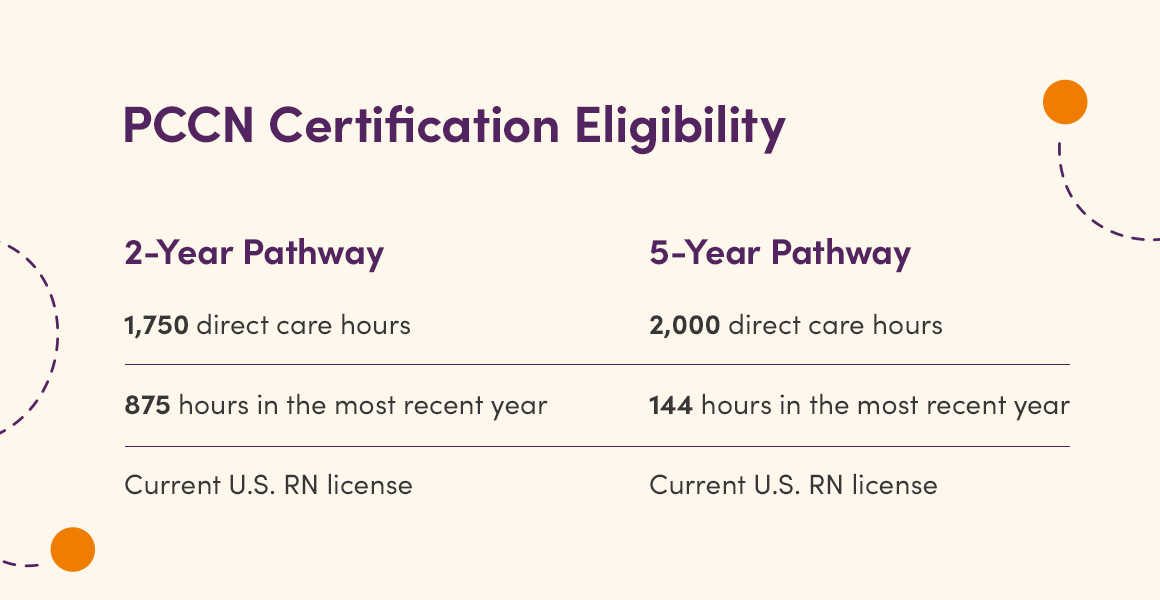
The American Association of Critical-Care Nurses (AACN) issues the Progressive Care Certified Nurse (PCCN) certificate, and it's the most directly relevant advanced telemetry nurse certification. PCCN specifically validates your expertise in caring for acutely ill adult patients, which is the core population in telemetry and progressive care units.
There are two PCCN certification eligibility pathways. The two-year option requires 1,750 hours in direct care of acutely ill adult patients, with at least 875 of those hours completed in the most recent year. The five-year option requires 2,000 hours total, with at least 144 in the most recent year. Both pathways require a current U.S. registered nurse (RN) license.
PCCN is especially valuable for travelers because it signals to hiring managers at new facilities that your skills have been externally validated. In travel nursing, you don't have the benefit of a long-standing reputation at a single facility. PCCN fills that gap by demonstrating that a recognized professional organization has confirmed your competence. It can make the difference when a facility is choosing between two otherwise similar applicants.
Cardiac Medicine Certification
Cardiac Medicine Certification (CMC) is a subspecialty certification from AACN that focuses on cardiac-specific clinical judgment. It's especially valuable for telemetry nurses working in coronary care units (CCU), combined intensive care and coronary care environments or cardiac progressive care units. CMC is designed for nurses in CCU, telemetry, progressive care, heart failure, interventional cardiology and cardiac cath labs.
One important distinction is that CMC requires a current base specialty certification before you can apply. It attaches to credentials like PCCN, so you'd hold a combined credential such as PCCN-CMC. The clinical hours requirement mirrors the PCCN structure. The two-year eligibility option requires 1,750 hours in direct care, with at least 875 of those hours specifically in cardiac patient care.
AACN explicitly identifies telemetry as one of the target settings for CMC, making it a natural fit for travelers who want to specialize further. If you're consistently taking assignments in cardiac-focused units, CMC can set you apart and may give you access to assignments with higher acuity or better compensation.
National Telemetry Association Certification
The National Telemetry Association (NTA) offers a more accessible option for formalizing your electrocardiogram (EKG) and cardiac monitoring expertise. The NTA provides a National Telemetry Certification and a National EKG Certification. Both are valid for two years, self-paced and fully online.
The Telemetry Certification requires prior healthcare experience, while the EKG certification has no experience prerequisite. The NTA certifications are a great starting point for nurses who want to document their telemetry skills but aren't yet ready for the clinical hours and base certification requirements of PCCN or CMC.
They can also serve as complementary credentials if you already hold the PCCN and want to further demonstrate your proficiency in rhythm interpretation and monitoring. As a certified telemetry nurse with NTA credentials, you add another layer of documented expertise to your profile.
How Your Certifications Affect Your Travel Assignments
These certifications translate into real-world advantages. Having the right credentials affects a telemetry traveler in concrete, practical ways:
Facility eligibility:
Some units require ACLS or PCCN as a condition of the assignment. Without them, you can't apply, no matter how strong your clinical background is.
Pay and competitiveness:
Advanced credentials signal proven expertise to new facilities where you don't have a built-in reputation. When a hiring manager is deciding between two qualified nurses, certifications often tip the scale.
Flexibility:
A more certified nurse can take on a broader range of telemetry assignments across different unit types, including step-down, progressive care and coronary care units. That flexibility means more options when you're choosing your next assignment.
The investment you make in certifications expands your access to assignments and strengthens your position when negotiating the details. The right RN telemetry certification can be the difference between waiting for an opportunity and having multiple offers to choose from.
Find Your Next Telemetry Travel Nursing Assignment With Trustaff
Now that you know what certifications can strengthen your profile, the next step is finding assignments that match your credentials and your goals. Trustaff connects telemetry nurses to high-paying travel jobs across the country. Founded in 2002 and Joint Commission certified, we pair you with an experienced recruiter who takes the time to understand what you're looking for.
We offer competitive pay packages, licensure reimbursement and comprehensive benefits. Explore telemetry assignments and connect with a recruiter who understands your specialty.