An
company | Brands
Types of Travel Nursing Assignments
Blog/Types of Travel Nursing Assignments
As a nurse, you've mastered skills that keep patients safe and facilities running smoothly. If you're ready for an adventure beyond a standard position, travel nursing opens a world of exciting possibilities, with assignments designed to fit different career stages, financial goals and lifestyles.
This guide breaks down the different types of travel nursing assignments, covering everything from contract length and location to in-demand skills and pay structures. Understanding what each assignment type offers lets you confidently choose fulfilling opportunities.
Assignments by Contract Length
Contract length is the typical way to categorize travel nursing assignments. It affects everything from your pay structure to how you'll integrate with a healthcare team.
Standard Travel Assignments
The industry benchmark is 13 weeks. This time frame is the sweet spot because it gives employers enough time to recruit and train permanent staff, while allowing you to settle into your new responsibilities and location. Many nurses find this length ideal for “test-driving” different facilities and deciding whether to extend their contracts or pursue permanent employment.
Assignments of up to 26 weeks offer even more stability. You'll have the chance to become part of a healthcare team and take on more complex patient cases. These extended placements also bring benefits such as deeper professional connections and the potential for assignment extensions or permanent job offers if you love where you work.
Short-Term and Extension Assignments
Short-term nursing travel assignments are popular for nurses seeking variety and career flexibility. These placements typically run four, six or eight weeks. You may want to consider accepting one if you adapt quickly to new work environments, diverse patient cases and healthcare teams.
Short-term assignments offer multiple advantages.
Maximum flexibility:
Move between locations to explore new cities and healthcare settings.
Quick exposure to diverse systems:
Gain experience with varied patient populations and protocols in a shorter time frame.
Ability to test different environments:
Try multiple hospitals or specialties before deciding if you want a longer commitment.
However, they may also bring a few challenges.
Frequent adjustments:
You will adapt to new work environments and protocols every few weeks.
Limited relationship-building:
You'll have less time to build connections with colleagues and patients.
Potential assignment gaps:
You may experience downtime between placements.
Assignment extensions are customary. A facility that still needs coverage after your initial agreement ends may ask you to stay longer, giving you the option to prolong your stay without committing to a longer placement up front.
High-Need, High-Impact Assignments
Some assignments stem from urgent, unforeseen circumstances. These placements are excellent for experienced nurses who can adapt quickly and thrive in high-pressure environments.
Crisis and Rapid Response Assignments
Sudden, unpredictable events like hurricanes, wildfires, pandemics, disease outbreaks and unexpected staffing emergencies create an immediate need for skilled healthcare professionals.
Healthcare systems facing crises need nurses who can step in and immediately deliver quality care with minimal orientation. The work requires clinical excellence and emotional resilience.
Crisis travel nurse assignments offer several potential upsides.
Premium compensation packages:
Salary potential in crisis conditions
reflects the
.
Immediate impact on patient care:
Step in and deliver quality care in dire circumstances.
Fast skill development:
Build expertise within high-pressure, high-acuity environments.
Drawbacks of crisis assignments include the following.
Unpredictable, stressful environments:
You'll need to work under emotionally challenging situations.
Longer shifts and overtime:
You may work extended hours managing higher patient loads.
Limited orientation time:
Minimal preparation means you must be ready to perform from Day 1.
Emergency and ICU nurses are well-suited for crisis placements. These specialties regularly handle acute, life-threatening cases, making the transition to high-pressure environments feel more natural.
Seasonal Assignments
Seasonal assignments cater to predictable fluctuations in healthcare needs throughout the year. They include providing care during flu season, holiday-related shortages and tourist season surges in vacation destinations. These assignments typically run four to 13 weeks.
Favorable aspects of seasonal travel nursing assignments include the following.
Predictable schedules:
Request assignments in advance to plan your work schedule.
High-demand locations:
You can secure placements in desirable destinations during peak seasons.
Competitive compensation:
You have the opportunity to earn higher pay rates due to increased demand.
Specialized skill development:
You'll build expertise in seasonal healthcare patterns.
Seasonal assignments also have a few possible weaknesses.
High competition:
Many nurses request these assignments early, especially for popular locations. Due to limited availability, you may be out of luck if you wait too long to apply.
Increased workload:
You'll handle higher patient volumes during peak demand periods.
Assignments Based on Location and Flexibility
Travel nursing does not limit you to interstate assignments. The field includes options for nurses who want to stay closer to home and those who are ready to work abroad.
Local Travel Nursing Assignments
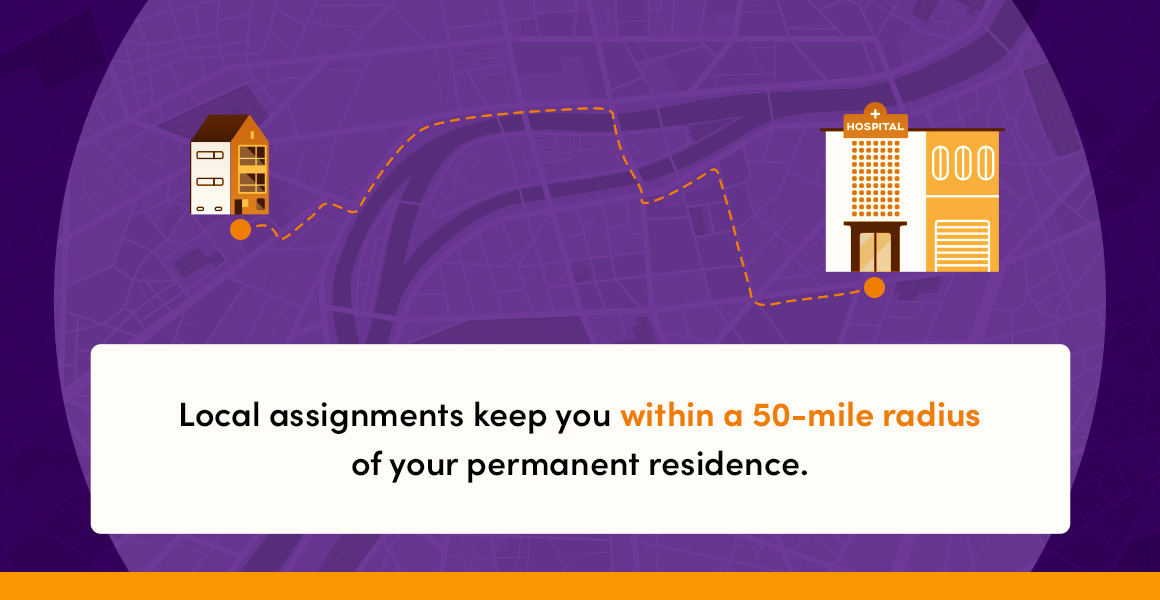
Local assignments keep you within a 50-mile radius of your permanent residence. You gain the flexibility and higher pay of travel nursing without relocating to a new city or state.
Maintaining your current lifestyle while earning higher pay lets you keep your home, support network and daily routines. If you have family obligations, pets or prefer the stability of staying local, this option delivers financial advantages without the upheaval of moving.
The trade-off is in your pay structure. Because you're not duplicating expenses by maintaining a home and paying for housing in another location, you won't receive tax-free housing stipends. Your compensation will be taxable hourly wages. You'll still earn more than a permanent staff position, but less than nurses who temporarily relocate.
International Travel Nursing Assignments
International assignments take your nursing career abroad. These assignments are typically long-term, ideal for adventurous nurses who want to combine their passion for travel with their careers.
Nurses are vital in international travel health, from pre-travel consultations to providing care abroad. Popular destinations for international travel nursing assignments include Australia, the Caribbean, the United Arab Emirates, Ireland and cruise ships.
The pros of international assignments are multifaceted.
Cultural immersion:
Experience life in another country while practicing your profession.
Diverse healthcare exposure:
Learn different medical practices and systems.
Personal and professional growth:
Develop adaptability and cross-cultural communication skills.
Competitive compensation packages:
Many positions include a housing stipend and travel benefits in addition to generous pay.
International travel nursing assignments also have some cons.
Complex licensing requirements:
You may need to complete visa applications, international certifications and additional exams.
Language and cultural barriers:
Adapting to different communication styles and healthcare expectations may be challenging.
Extended preparation time:
Allow yourself several months to fill out all the necessary paperwork.
Distance from family and friends: You'll be away from your loved ones for an extended time.
How to Qualify for Top Traveling Nurse Assignments
Qualifying for travel nursing assignments requires a combination of education, experience and professional credentials. Meeting the necessary qualifications is essential to securing your desired travel nurse assignment.
1. Education and Licensure Requirements
You'll need a foundation to qualify for travel assignments.
Completing an accredited nursing program:
Earn an associate or bachelor's degree in nursing. Remember, some facilities only accept nurses with a bachelor's degree or higher.
Passing the National Council Licensure Examination:
Obtaining your registered nurse license is a fundamental requirement before applying for travel nursing assignments.
Applying for a Nurse Licensure Compact:
Some states
, which allows nurses with a single license to practice in multiple states.
Gain clinical experience:
Most facilities require
of recent, relevant experience in your specialty area to ensure you can adapt quickly with minimal orientation.
Additional certifications:
International travel nursing assignments may require additional licenses and qualifications to allow you to work in the country of your choice.
2. Specialty Certifications
Specialty certifications can enhance your qualifications for travel nursing assignments. These demonstrate your expertise and commitment to a specific area of nursing, such as trauma or pediatric life support, and strengthen your candidacy for assignments in high-demand or specialized units.
You must meet specific eligibility criteria to pursue specialty certification, such as having minimum clinical experience in the specialty area. Research the relevant certifications for your specialty and consider investing additional time and money in obtaining them to boost your travel nursing qualifications.
3. Professional References and Background Checks
As part of the qualification process, you’ll need to provide professional references and undergo background checks. Maintain positive relationships with your colleagues, supervisors and other healthcare professionals. They can provide valuable references when you apply for travel nursing positions.
Travel nursing agencies and healthcare facilities also conduct thorough background checks to ensure patient safety and regulatory compliance.
These inspections may include:
Criminal background checks
Drug screenings
Verification of your education
Licensure and employment history
Maintain a clean professional record and be transparent about potential issues that the background check may reveal.
4. Flexibility and Adaptability
Nursing is a career that rewards openness to change. Travel assignments often involve working in new environments, collaborating with different healthcare teams and adapting to varying patient populations and protocols.
A positive attitude and the ability to think quickly on your feet can set you apart as a promising applicant.
How to Choose a Nursing Assignment
Selecting an assignment requires honest self-assessment. A placement that appears ideal on paper might not work for you in practice. Taking time to evaluate your goals, skills, lifestyle needs and practical requirements will help you make confident decisions for your nursing career.
Align Assignments With Your Goals and Skills
Start by defining your objectives. Are you trying to build skills in a new specialty? Do you want to earn more money or gain experience at a top-tier hospital? Whatever your reason, your career goals should drive your assignment choices.
Consider assignments that match your expertise and allow you to expand your nursing skills. Look for opportunities that provide exposure to new techniques, technologies or patient populations within your specialty.
If income is your priority, crisis assignments offer the highest pay rates. Emergency and ICU nurses have access to these top traveling nurse assignments because their skills are in constant demand. Specialties that handle acute, life-threatening situations are among the most sought-after for travel positions.
In-demand specialties include emergency rooms, critical care, operating rooms and labor/delivery.
Factor in Your Lifestyle and Personal Needs
The variables that make up your life outside work (family, pets and preferences) should also influence your decision.
Picking destinations that match your lifestyle will make your assignments more enjoyable and sustainable. Mountain or coastal areas appeal to outdoorsy people, while vibrant cities are a better fit if you prefer cultural attractions and nightlife.
If you're new to travel nursing, start with a standard 13-week assignment in a location that's not too far from home to ease into this exciting career path.
Breaking Down the Travel Nurse Pay Package
Your total pay package includes multiple components beyond your hourly rate. Travel nurse salaries vary by location, specialty and assignment type. You'll see these three elements in most offers.
Taxable base wage:
Your hourly rate for all hours worked, which appears on your W-2 and is subject to standard income taxes
Non-taxable stipends:
Fixed amounts for housing and meals and incidental expenses that cover living costs while on assignment (only available when you duplicate expenses by maintaining a permanent tax home)
Travel reimbursement:
A stipend or mileage reimbursement that covers the cost of getting to and from your assignment location
Some facilities also offer completion bonuses if you finish your entire assignment without breaking your commitment early. Look at the total compensation, not only the hourly rate. A lower hourly wage with generous stipends might pay more than a higher hourly rate with minimal benefits.
Partner With a Reputable and Supportive Company
Choose a reputable travel nursing company that provides support throughout your assignment. Look for companies with responsive communication, experienced recruiters and a track record of placing nurses in high-quality facilities. Look at the company’s support services, such as housing assistance, clinical liaison and mental health support facilities.
Frequently Asked Questions
These quick answers address common questions about getting started in travel nursing and what to expect once you begin taking assignments.
Can I Take Time Off Between Assignments?
Flexibility is one of the perks of a travel nursing career. Many nurses schedule breaks ranging from a few weeks to several months between assignments.
Do Travel Nurses Get Benefits?
Yes. Reputable travel nursing agencies like Trustaff offer comprehensive benefits packages that include options for medical, dental, vision insurance and more, which are integral to your total compensation package.
How Does Housing Work for Travel Nurses?
You have two primary housing options, either of which can work well, depending on your preferences. Finding suitable accommodations requires some planning, but having these two paths means you can choose what fits your needs.
Agency-placed housing (rare): Your agency finds and secures furnished, move-in-ready accommodations for your contract duration, ideal for first-time travel nurses.
Housing stipend (more common): You receive a tax-free monthly amount and find a place, offering more flexibility and control over location and amenities.
Find Your Next Travel Nursing Assignment With Trustaff
Trustaff connects nurses with some of the highest-paying travel positions nationwide. Working with us gives you access to competitive pay packages and access to benefits through our Ingenovis Health Clinician Experience program. As experienced recruiters, we'll take the time to understand what you're looking for and help you find assignments that fit your career ambitions, whether that's a crisis assignment in a high-demand specialty or a local contract that keeps you close to home.
Ready to explore your options? Browse travel nursing jobs, contact our team with questions or apply now to connect with a recruiter who can help you find your next adventure.