An
company | Brands
Tips for Becoming a Healthcare Traveler
Blog/Tips for Becoming a Healthcare Traveler
Becoming a healthcare traveler opens the door to new places, higher pay and the chance to work in diverse clinical settings — but figuring out where to begin can feel overwhelming. It's natural to be unsure about what certifications you need or to bounce between excitement and uncertainty.
The good news is that demand is firmly on your side. The Bureau of Labor Statistics projects roughly 189,100 annual openings for registered nurses — a level of demand that creates steady opportunities for people with the appropriate skills and the willingness to explore.
Essential Traveling Nurse Tips
You should meet a few prerequisites before you begin exploring travel assignments. Staffing agencies generally seek similar core qualifications when evaluating potential travelers.
Healthcare Education and Certifications
Your educational background is crucial for a successful career. Earning either an associate degree or a B.S. in nursing will qualify you to take the National Council Licensure Examination and become an RN.
Beyond your degree, maintaining current certifications that demonstrate your ability to handle critical situations is vital. Most facilities require familiarity with basic life support skills. These additional credentials will significantly boost your competitiveness.
Advanced cardiac life support: Required for many ICU, ER and critical care positions.
Pediatric advanced life support: Highly recommended for pediatric units and emergency departments.
Specialty certifications: Credentials like CCRN for critical care or CNOR for operating room nurses can truly distinguish you.
Some specialties may also require facility-specific competencies or exams before an assignment begins. You can remain competitive and maintain your licensure by pursuing continuing education. Keep a readily accessible record of certifications and compliance documents to streamline your hiring process.
Gain Clinical Experience
Travel positions are not entry-level roles. Agencies typically require one to two years of hands-on experience in your specialty before considering placement. This period is essential for building the confidence and skills you will need as a traveler.
Focus on high-demand settings: Experience in ICU, ER and OR settings often unlocks more assignment opportunities nationwide.
Build independent practice skills: You’ll want to be comfortable managing full patient loads independently in fast-paced environments.
Develop versatility: Floating between units demonstrates your quick adaptability to new situations to future employers.
Secure strong references: Agencies typically require references from supervisors or charge nurses during the application process.
Travel Career Logistics and Planning
With an education and a few years of experience under your belt, you're ready to tackle the logistical aspects of travel nursing. Understanding licensing requirements and narrowing down an agency might seem overwhelming at first, but breaking them down makes the process manageable.
Nurse Licensing and State Compacts
The Nurse Licensure Compact is an invaluable resource for travel nurses. A multistate license lets you practice in any compact state without applying for additional licenses, making it one of the most efficient ways to expand your opportunities. Your home state's board of nursing is also an excellent source for guidance on eligibility and multistate license application instructions.
Together, these resources streamline the licensing process and offer significant advantages for anyone pursuing travel nursing.
Wider reach: Practice in multiple states with a single license.
Faster placement: Bypass lengthy wait times often associated with single-state license approvals.
Cost savings: Pay for one license rather than multiple state applications.
Since not all states participate in the compact, you'll need to obtain single-state licenses for assignments in non-compact states. Fees and processing times vary by state, typically ranging from a few weeks to several months. It's also wise to check for state-specific requirements like background checks or fingerprinting.
A lapsed license can delay or cancel an assignment, so diligently track expiration dates with a calendar or app.
Choose a Travel Nurse Agency
Partnering with a staffing agency will make or break your travel experience. Here’s what to thoughtfully evaluate when comparing your options.
Recruiter relationship: Agencies should connect you with a dedicated recruiter who genuinely understands your goals and preferences.
Benefits package: Thoroughly compare health insurance, housing stipends, retirement contributions and other valuable perks.
Job availability: Ensure the agency consistently offers openings in your specialty and preferred locations.
Clinical support: Access to 24/7 support is invaluable when you're learning the ropes at a new facility or facing challenges during an assignment.
Reputation: It's a best practice to read reviews and insights from other travel nurses.
A great agency should simplify administrative tasks, not add to your workload. Assess their housing assistance options and confirm they provide flexibility and a comprehensive salary and benefits package throughout your entire placement.
Prepare for Your First Assignment
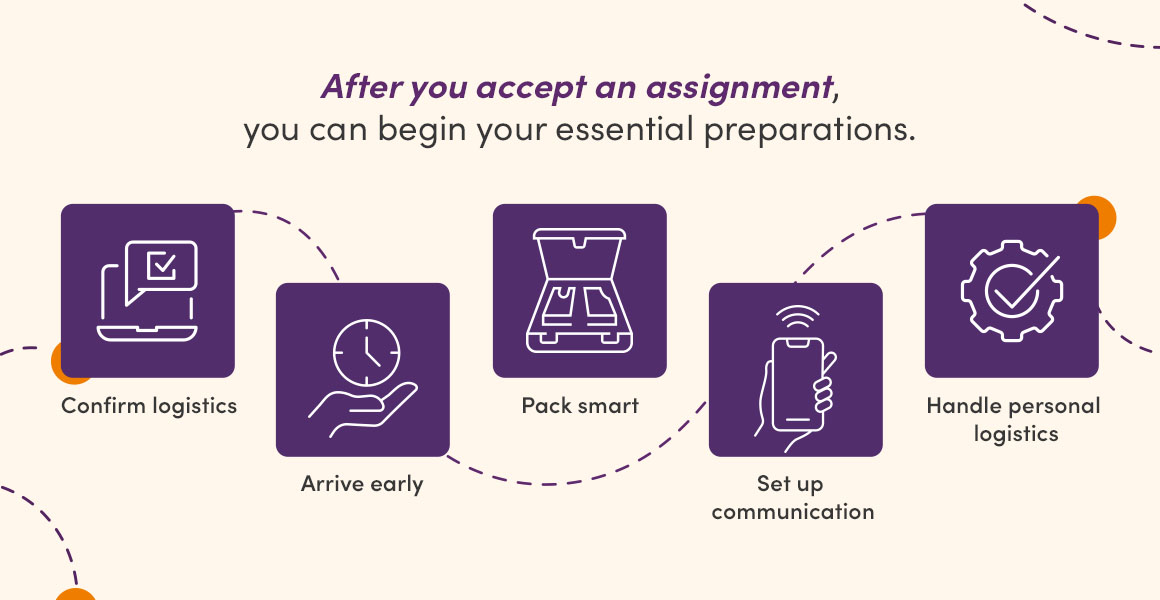
After you accept an assignment, you can begin your essential preparations. Proactively addressing these details will let you start work feeling organized and self-assured.
Confirm logistics: Double-check your housing arrangements, commute specifics and precise start date and time.
Arrive early: Allow yourself a day or two to settle into your new surroundings before your first shift.
Pack smart: Bring versatile essentials and clothing suitable for varying climates.
Set up communication: Verify your phone plan's functionality at your new location and secure reliable internet access to stay connected with your recruiter.
Handle personal logistics: Arrange mail forwarding, inform your bank of your new location and organize emergency contacts before your departure.
The Healthcare Traveler Lifestyle
You've explored the qualifications and initial steps. Now, let's look at what the job is truly like once you're on assignment. The healthcare traveler lifestyle offers distinct advantages and unique drawbacks, all worth considering.
Benefits and Challenges of Travel Nursing
Travel nursing unlocks opportunities unmatched by traditional staff positions, but it also calls for adaptability and preparation. Here’s a balanced look at the healthcare traveler pros and cons you can expect.
Explore diverse regions: Experience working in healthcare systems across the country and discovering new cities.
Build a nationwide network: Connect with professionals across multiple states to expand your career contacts.
Control your schedule: Enjoy greater flexibility over when and where you work, including the option to take rejuvenating breaks between assignments.
Accelerate skill development: Gain exposure to new technologies and clinical practices to powerfully enhance your long-term career growth.
Challenges to be aware of include:
Frequent onboarding: Regularly navigate new orientation processes, with facilities often expecting rapid assimilation into their systems and minimal training.
Income fluctuations: Potential gaps between assignments can impact your earnings if not carefully planned.
Cultural adjustment: Each new workplace presents its own expectations and team dynamics, often requiring constant adaptation.
Housing logistics: Frequent moves and short-term living arrangements typically become routine parts of the experience.
The recent demand for travel nurses, particularly during the pandemic, saw hospitals increasingly rely on them. The use of supplemental nurses more than doubled in many facilities, with some depending on them for up to 28% of RN hours.
This demand continues to create robust opportunities for those ready to embrace the challenge.
Traits of a Successful Traveler
While the travel nursing lifestyle isn't for everyone, those who excel share distinguishing qualities that help them adapt to this career path's unique demands. Working in varied clinical settings and team dynamics requires specific strengths to thrive.
Adaptability: Quickly adjust to new protocols, equipment and workplace cultures.
Clinical confidence: Perform at a high level starting on Day 1, even with limited orientation.
Resilience: Possess the ability to bounce back from challenging shifts or difficult assignments, as constant change can be demanding.
Strong communication skills: Swiftly building a rapport with new teams is essential for fitting in.
Proactive approach: Take initiative to solve problems rather than waiting for others to intervene.
Emotional intelligence: Effectively read a room and adapt your style to different team dynamics.
Explore Your Future With Trustaff
Becoming a healthcare traveler offers immense chances for professional growth and personal adventure as you build your clinical skills and explore new places from coast to coast. While this transition is thrilling, it can also feel daunting, especially if you're just starting.
Trustaff excels at connecting talented nurses with outstanding, high-paying travel assignments nationwide. We'll pair you with a dedicated recruiter who will personally guide you through licensing and credentialing to securing the perfect placement.
When you're ready, explore our available travel nursing opportunities or connect directly with a Trustaff recruiter.